Humanity’s oldest question
Ask the World30s
Ask the Future30s
Browse communities → Register your community →
Nine chapters · 3200 BCE → now
Neighbors· City· State· Country· Earth
Communities on Sensus

Join a community waitlist.

The record · chapters I – IX

Every age built a new way to ask. None could hear everyone.

A short history of the public voice — and why it took five millennia to hear it in real time.

I · c. 3200 BCE · Uruk, Mesopotamia

The first record.

In the first cities, scribes pressed reed into wet clay to fix the group’s mind in something harder than memory — grain owed, rations shared, rulings of the assembly. For the first time, what a people thought outlived the people thinking it.

Pl. Ic. 3200 BCE
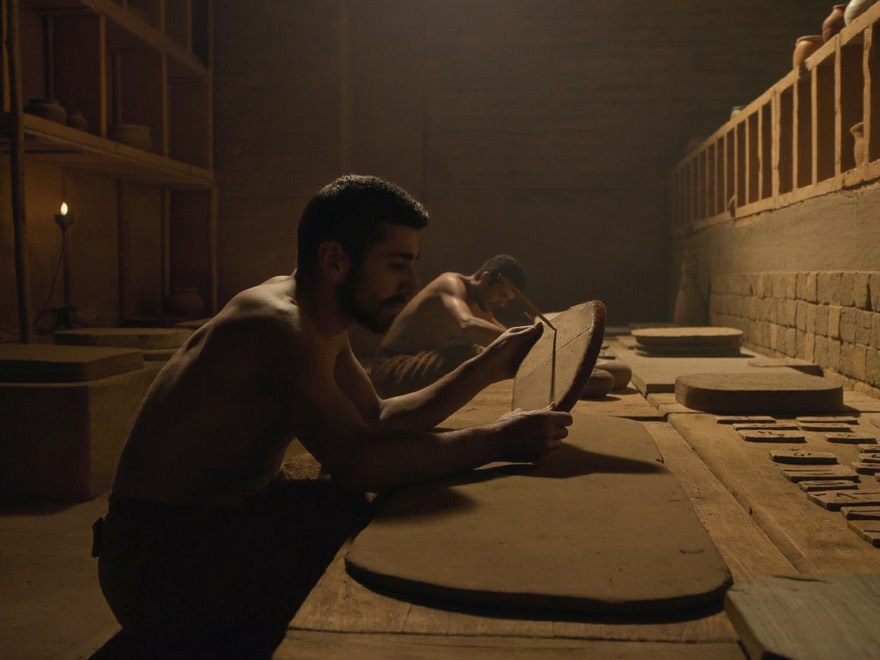
A Sumerian scribe in lamplight pressing a reed stylus into a wet clay tablet in the archive at Uruk
Fig. I — The archive, Uruk
II · 508 BCE – 117 CE · Athens & Rome

The vote is invented.

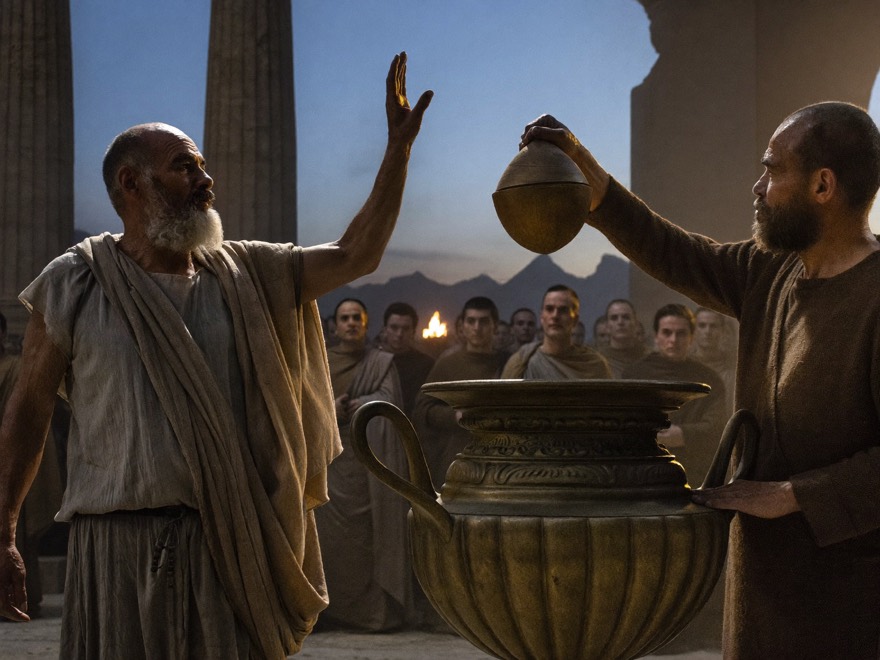
Athenians dropped pebbles into urns and called it demokratia. Rome stamped the answer on its standards — the Senate and the People — and its census counted an empire head by head. But the count came back in years, not moments.

Pl. II508 BCE
A bearded philosopher debates before gathered citizens in the agora at dusk while a ballot is dropped into a great bronze voting urn
Fig. II — The urn, Athens
III · 1440 · Mainz

Opinion learns to travel.

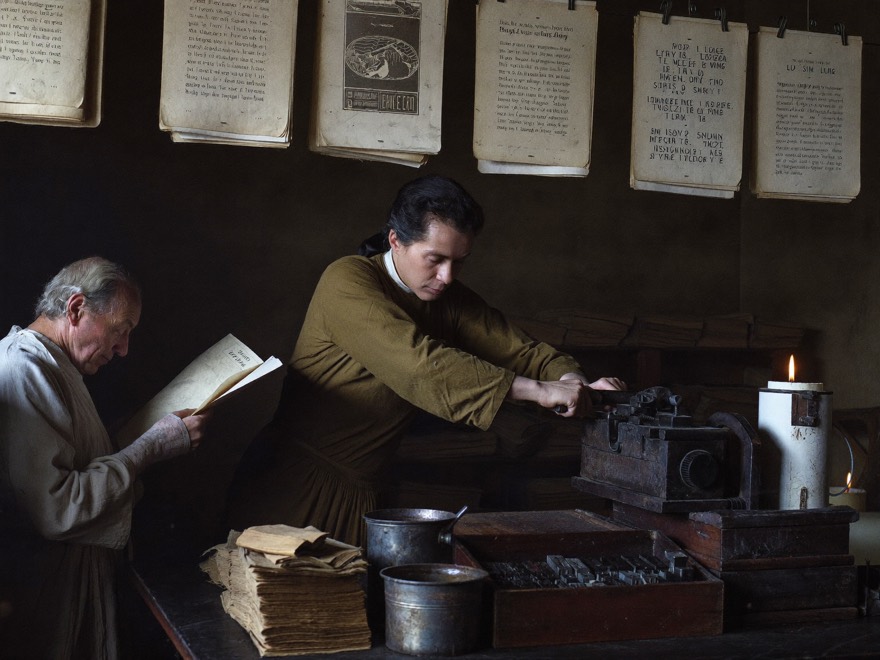
Movable type turned one voice into ten thousand. An idea could suddenly outrun the crowd it started in — and no ruler could call it back. Pamphlets became the first public square that didn’t need a square.

Pl. III1440
A printer works a wooden hand press by candlelight while a compositor reads a fresh proof, printed pages hanging above
Fig. III — The press, Mainz
IV · 1492 · The open Atlantic

The map becomes whole.

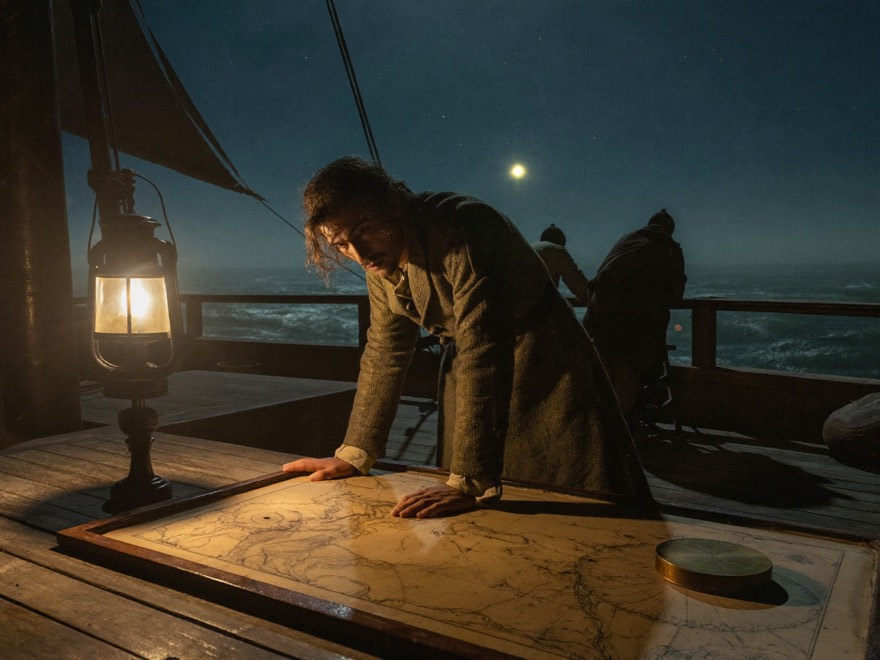
Two halves of humanity found out about each other. From that crossing on, every question had a bigger audience than any square, senate, or city could hold — and no single map of “everyone” existed anymore.

Pl. IV1492
A navigator leans over a lantern-lit portolan chart on a caravel deck at night, crewmen at the rail over a moonlit swell
Fig. IV — The crossing, 1492
V · 1776 · Philadelphia

“We the People.”

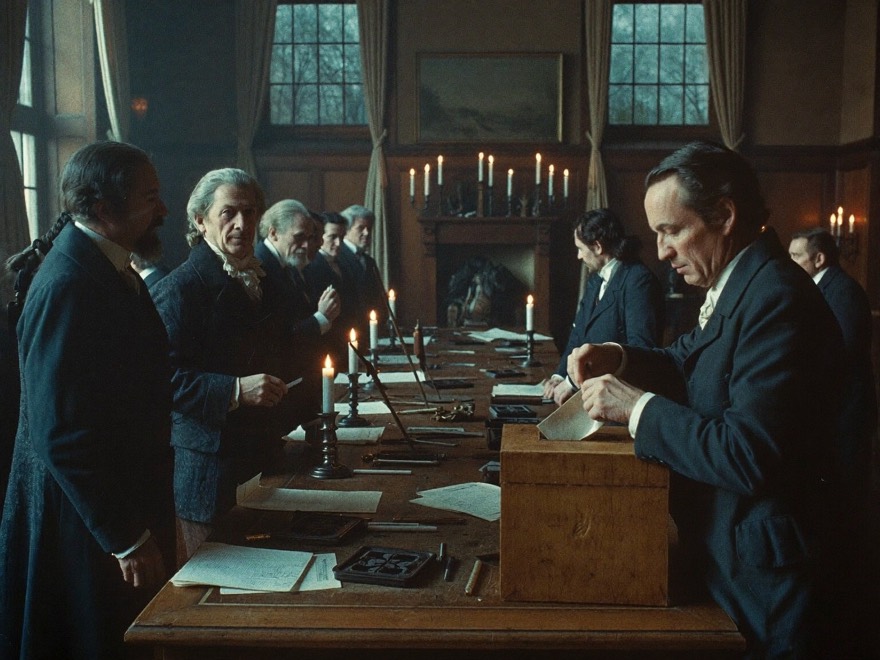
Pamphlets, town halls, and a wager that common opinion could govern. The ballot box became a machine for measuring the public mind — one heavy, precious answer at a time, a few appointed days per decade.

Pl. V1776
Delegates in a candlelit Philadelphia hall debate around a long table while one places a folded ballot into a wooden box
Fig. V — The ballot, Philadelphia
VI · 1844 · The wire

A nervous system.

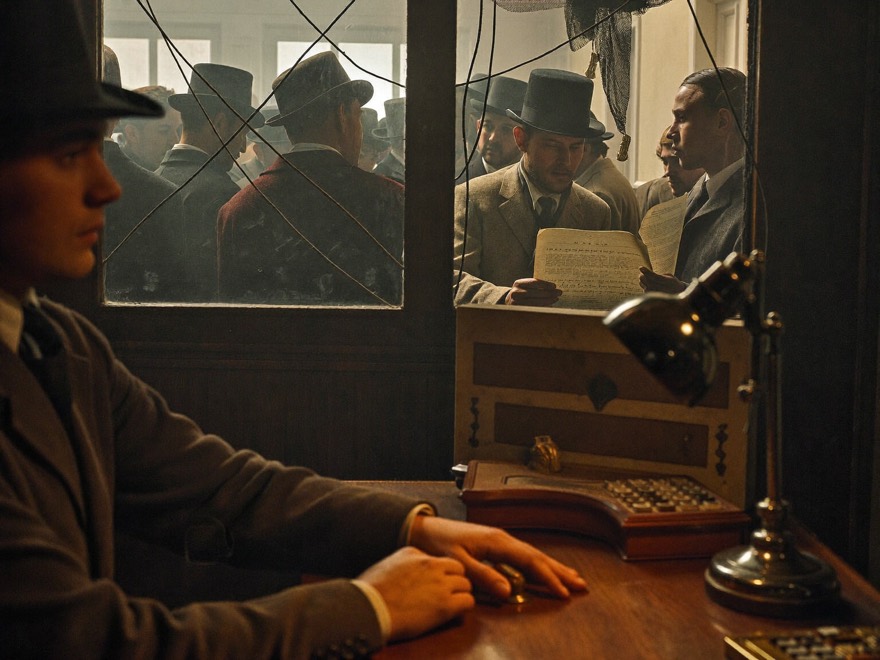
“What hath God wrought,” tapped in dots and dashes from Washington to Baltimore. A question could cross a continent faster than a horse for the first time in history — and the world began to feel its own pulse.

Pl. VI1844
A telegraph operator at the brass key while a crowd of townspeople beyond the office glass reads the incoming message
Fig. VI — The wire, 1844
VII · 1936 · The sample

Opinion becomes a science.

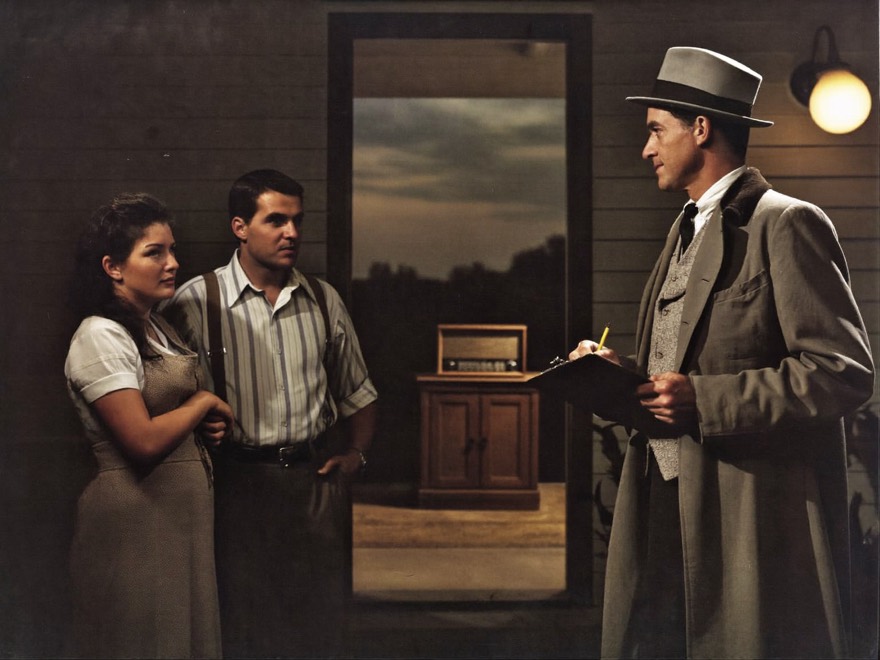
George Gallup asked a few thousand people — and out-predicted a straw poll of two million. Measurement worked. But it stayed a snapshot taken by someone else: slow, narrow, and always somebody else’s question.

Pl. VII1936
A 1930s pollster with a clipboard interviews a couple at their doorway, a cabinet radio glowing in the room behind
Fig. VII — The doorstep sample, 1936
VIII · 1991 · The network

Everyone can speak.

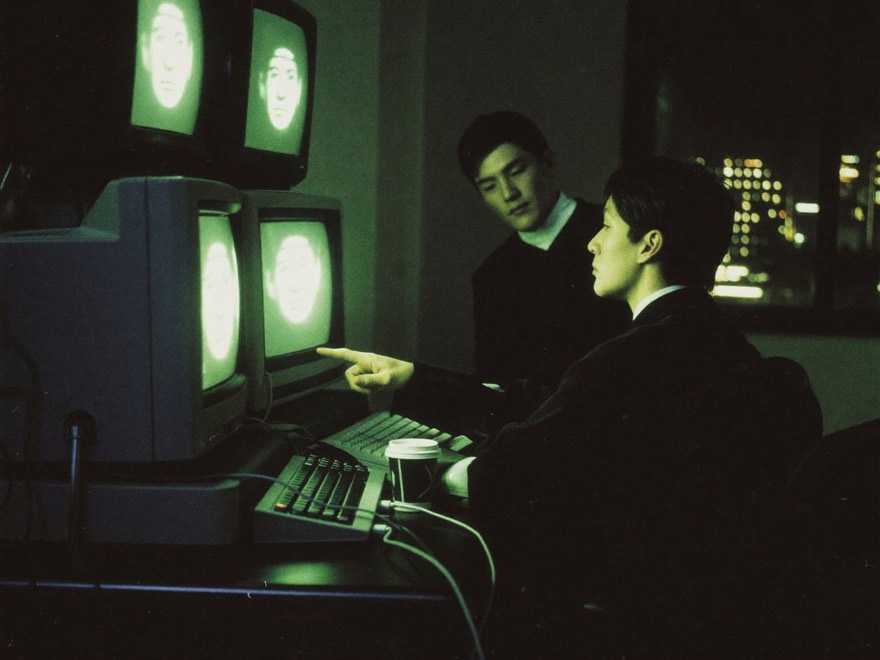
The web wired every mind to every other, and billions of voices poured in at once. But feeds reward the loudest, not the most. We built the megaphone before we built the ear — and volume started passing for consensus.

Pl. VIII1991
Two researchers in a dim 1991 computer room lit by the green glow of CRT terminals showing faces, city lights beyond the window
Fig. VIII — The network, 1991